What went wrong with your last batch?
Be honest — we've seen it all. Pick the failure that haunts you most. We'll show you exactly how to fix it.
As fermented in kitchens across
I opened the jar on day four and there was this white fuzzy ring around the top. I threw the whole batch out immediately. Turns out I've been throwing out perfectly good ferments for two years.
That white stuff probably isn't mold.
And even if it is — you're not in danger. You just need to learn the difference.
Kahm yeast is the most misidentified thing in fermentation. It's flat, white, and looks alarming. Actual mold is fuzzy, raised, and often colored. Your nose knows the difference before your eyes do: kahm smells yeasty and slightly funky. Mold smells wrong — like something died. We teach you to read the surface of your ferment the way a baker reads a crust.
What your instructor will show you
- 1How to distinguish kahm yeast from mold in under 30 seconds
- 2The smell test: what's safe, what's not, and why your instincts are usually right
- 3Weight vs. airlock systems — which setup prevents surface growth entirely
- 4When to salvage and when to compost (the real answer surprises most students)
Module 1 · Fermented Foods
Surface Activity: Reading Your Brine
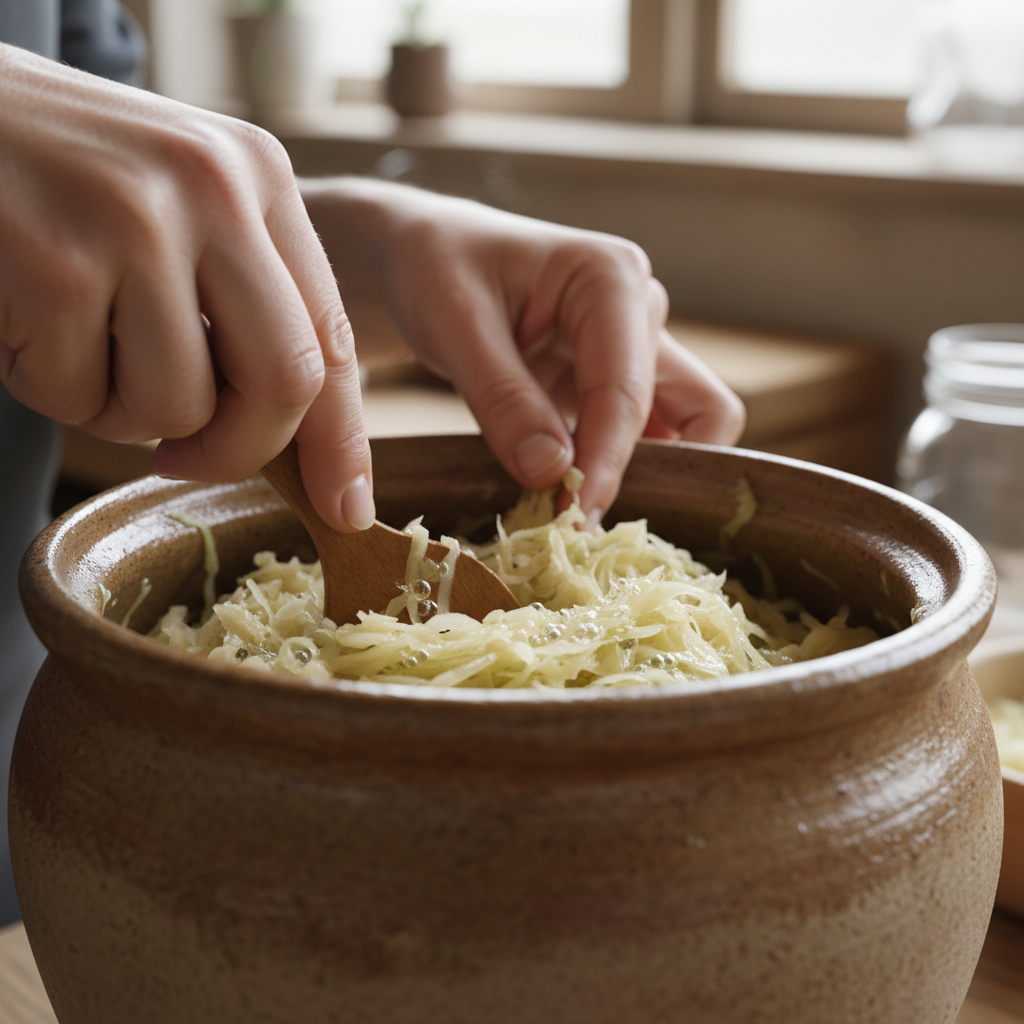

Live technique demo
Instructor hands-on method
My first batch of saison was genuinely incredible. The second one tasted like wet cardboard. The third was somewhere in between. I have no idea what I'm doing differently — or if I'm doing anything differently at all.
Inconsistency is just untracked variables.
Once you know what to measure, every batch becomes a conversation.
Wild fermentation isn't random — it just has more moving parts than you've been tracking. Temperature swings of even five degrees change yeast behavior completely. The mineral content of your water shapes flavor more than your grain bill does. We don't teach you to control everything; we teach you to notice the three variables that account for 80% of flavor variance, so your next batch is a deliberate choice, not a lottery.
The three variables that matter most
- 1Fermentation temperature: the single biggest lever for flavor control
- 2Water chemistry basics: why your tap water might be fighting you
- 3Pitch rate and starter health: how culture vitality determines outcome
- 4A simple brew log template that catches variance before it becomes a problem
Module 3 · Homebrewing
Flavor Variables: What to Track and Why
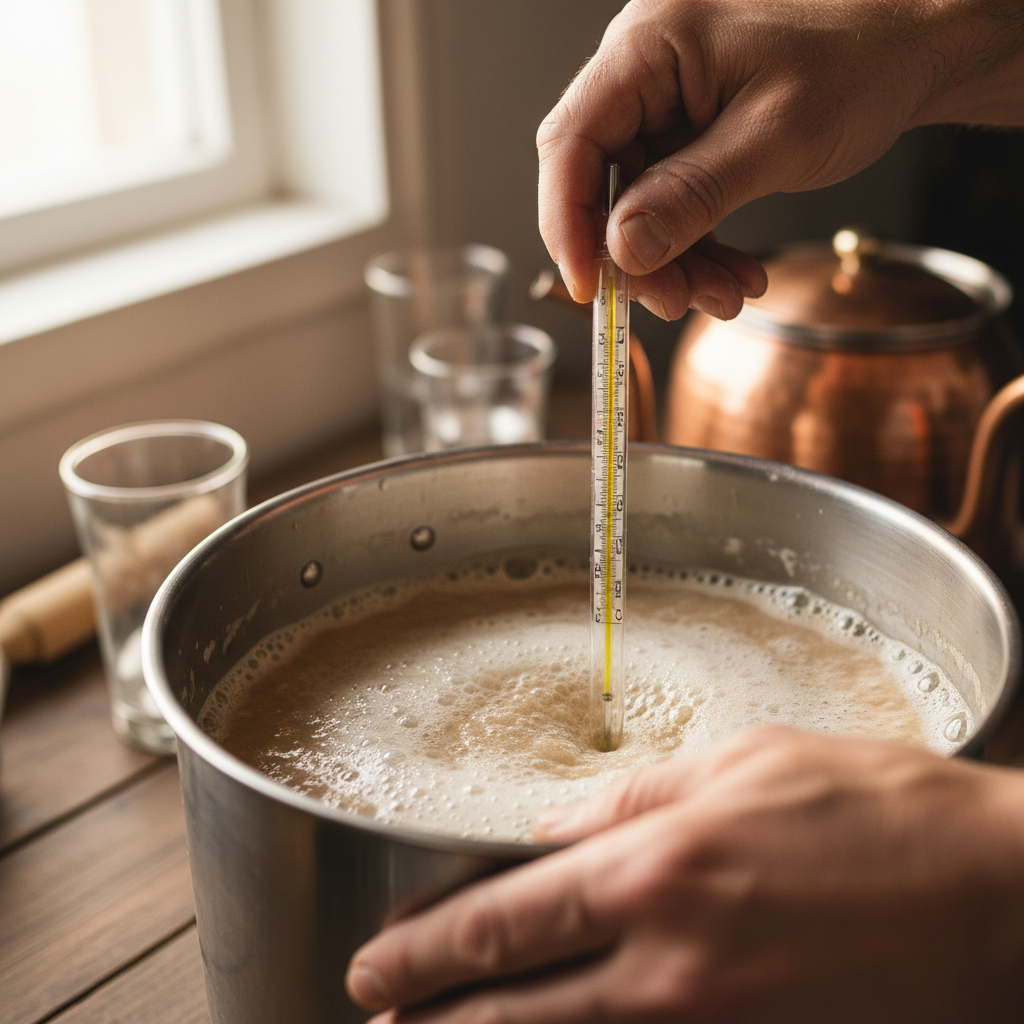

Live technique demo
Instructor hands-on method
Every recipe says 'ferment for 7–14 days.' That's not a recipe, that's a weather forecast. How am I supposed to know when it's actually done?
Your cultures will tell you when they're ready.
You just need to learn their language.
Time is a proxy, not a measurement. What you actually want to track is activity, acidity, and flavor development — three things your senses can read directly once you know what to look for. A kombucha SCOBY that's been sitting in a warm kitchen for five days may be more ready than one that's been fermenting for two weeks in a cold garage. We teach you to taste with intention, read the bubbles, and understand what your culture is actually communicating.
How to read your ferment's readiness
- 1The float test, the bubble count, and the taste progression — three checkpoints in order
- 2pH strips vs. taste: when to use which, and why your tongue is often more accurate
- 3Environment mapping: how to account for your kitchen's specific temperature patterns
- 4The "second ferment" decision point for kombucha and water kefir
Module 2 · Kombucha & Cultures
Readiness Signals: Reading Your Ferment
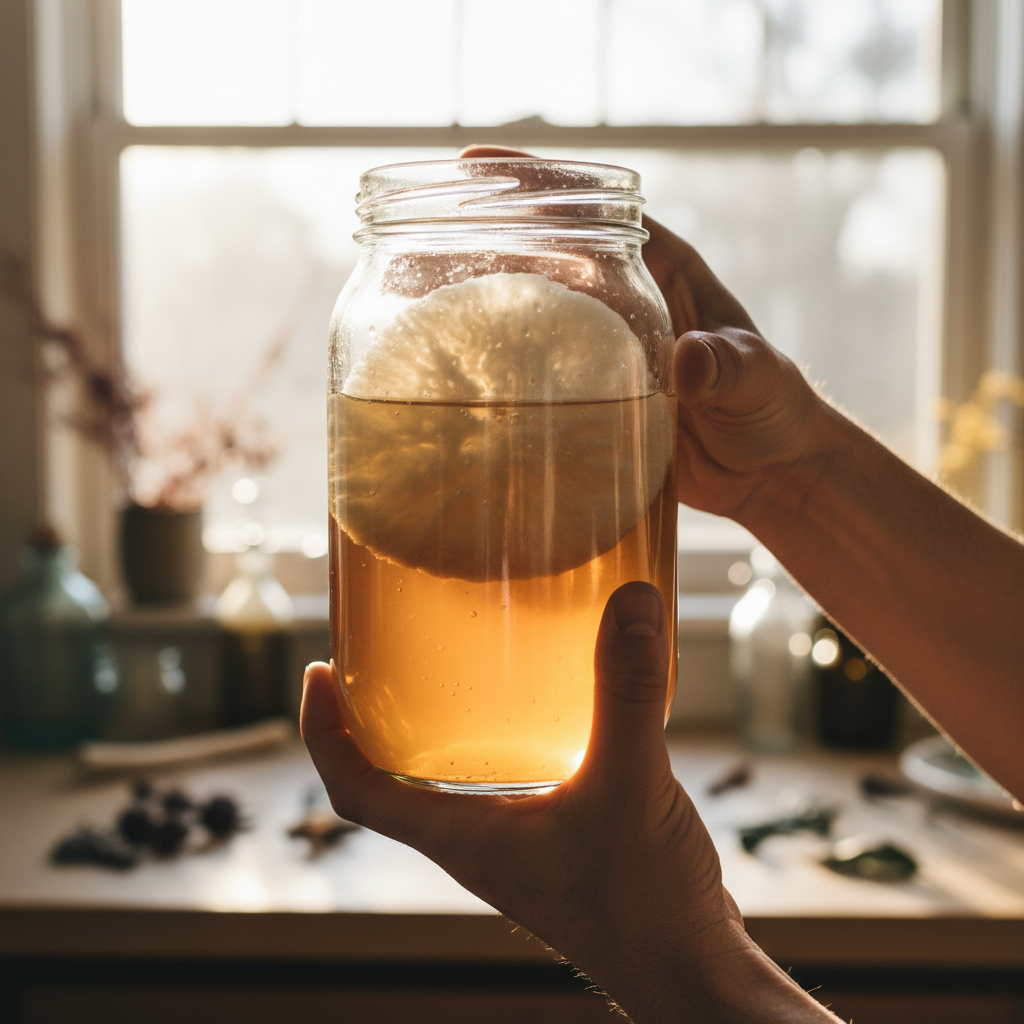

Live technique demo
Instructor hands-on method
You're not bad at this.
You just haven't learned to read your cultures yet.
You've already learned something real today. The free first lesson is a continuation, not a transaction — just the next thing your cultures need you to know.